|
|
DIGGING IT
Trenching Across the 'Biggest Little
City' in the World
By Tony Illia
 |
| The mammoth channel will
use 10,000 truck loads of concrete and require 661,000
cu yds of excavation, 140,000 cu yds of backfill and 9
million lbs of reinforcing steel. Roughly 80,000 cu yds
of concrete will form the 2.5-ft-thick, U-shaped trench.
PHOTO COURTESY OF DAVID ROBERT
|
Reno gets a new railway trench that will
ease congestion, improve aesthetics and increase access through
its busy downtown corridor.
Reno, known for its glittering casinos, headliner celebrities
and lively nightlife, is removing an unsightly blemish from
its downtown landscape by building a depressed rail trench
similar to the Alameda Transportation Corridor near Los Angeles.
The $265.4-million design-build project, called ReTRAC (Reno
Transportation Rail Access Corridor), will neatly tuck away
heavy train traffic that has run at-grade for decades through
the heart of the city, making the area more tourist friendly.
The 42-month ReTRAC project will alleviate traffic congestion,
improve visitor safety and boost property values by creating
a 33-ft-deep, 54-ft-wide rail trench along the existing Union
Pacific railroad tracks. The 2.21-mile-long job runs from
the intersections of Fourth and Second streets, east to Sutro
Street and Commercial Row. It consists of two mainline tracks
that can handle train speeds up to 60 mph, with 11 at-grade
bridge crossings above for vehicle traffic and an access road.
The city hired the Truckee Meadows ReTRAC Team, a joint-venture
between Moffatt & Nichol Engineers, Long Beach, Calif.,
and DMJM+Harris, a New York City-based Aecom subsidiary, in
June 2001 to facilitate the design-build procurement process.
The team developed bridging documents from 20 to 30% completion,
outlining the trench depth, alignment, width and other performance/
design criteria. The city later hired Jacobs Engineering Group
Inc., Pasadena, Calif., as project manager under an $8.8-million
contract.
 |
| Truckee Meadows ReTRAC
Team, the joint-venture contractor on the project, is
installing a waterproof cutoff wall and seal slab across
the trench bottom, consisting of 30,000 cu yds of tremied
concrete and eight miles of foundation piles. PHOTOS COURTESY
OF DAVID ROBERT |
"Very early on it was our judgment that design-build
would be the best procurement method," says Steve Varela,
city public works director. "We saved about 18 months
over a traditional design-bid-build method. Due to the number
of different construction concepts and possibilities, we didn't
want to restrict the contractor."
The city launched a two-step design-build competition in
the late 2001, evaluating the eight teams' experience, financial
strength and backgrounds. The field was then narrowed down
to four teams that detailed costs, design, schedule and construction.
The winner was ultimately selected on a best-value basis,
where price accounted for 70% of the decision.
Granite Construction Co. Inc., Watsonville, Calif., with
Parsons Transportation Group, Pasadena, Calif., was awarded
a $170.7-million guaranteed maximum price design-build contract
in July 2002, which has grown by $2 million due to owner-driven
scope-of-work additions, including utility mitigation and
a 700-ft trench extension.
"ReTRAC is going to help tremendously in keeping traffic
moving through the downtown area," says Varela. "[Union
Pacific] is talking about having 24 trains a day run through
downtown by next year and up to 36 trains daily by 2030."
Historic Priority
The idea of lowering the downtown railroad tracks dates back
over 60 years to the Great Depression when the U.S. Bureau
of Public Roads proposed elevating the railroad. That idea
was quickly nixed in favor of depressed tracks. By 1942 the
local chamber of commerce called the project the "number
one civic improvement for the readjustment period after the
war." Despite this, the rail upgrade never materialized
due to its cost and complexity.
 |
|
Cost: $265.4 million
Duration: 42 months
Design-Build Contract:
$170.7 million
Trench Length: 2.21 miles
Trench Depth: 33 ft
Trench Width: 54 ft
Trench Thickness: 2.5 ft
Bridges: 11
Average Bridge Width: 80
ft
Average Bridge Length:
59 ft
Average Bridge Thickness:
2 ft
Excavation: 661,000 cu
yd
Pilings: 3,000
Backfill: 140,000 cu yds
Concrete: 179,000 cu yds
Steel: 9 million lb
Paving: 1 million tons
Peak Work Force: 250
Track Speed: 60 mph
Economic Impact: $350 million
|
But the 1995 merger of the Union Pacific and Southern Pacific
railroads gave the project new life. Union Pacific agreed
to turn over its 54-ft-wide easement rights and contribute
$60 million to the undertaking, making the project a reality.
Other contributing funds came from a $50.5-million Transportation
Infrastructure Finance and Innovation Act loan from the Federal
Highway Administration and Nevada Dept. of Transportation
funds. The remaining funds are from city revenue bonds, issued
by New York-based Goldman, Sachs & Co., with the debt
being retired over 40 years through a combination of a sales,
room and property taxes.
Nolte Associates Inc., Sacramento, Calif., which initially
conducted some of the early project studies, performed the
$4.4-million environmental impact statement from 1999-2000
for Nevada DOT. The firm was later hired by Parsons as a design
subcontractor for the bridges, trench and roadways.
After initial design and right-of-way issues, which included
some property condemnations, project construction started
in September 2002. Granite used a temporary or "shoofly"
track to reroute train traffic in order to excavate the trench.
The undertaking, however, uncovered some 80 archeological
sites, including a prehistoric Native American habitat dating
back 4,000 years.
The discoveries added about $600,000 to the project cost
for curating and analyzing the artifacts as outlined under
FHWA and State Historic Preservation Office agreements. Reno-based
MADCON Consultation Services is the environmental/ archeological
consultant under a $6.4-million city contract.
"The unexpected find is unlike any site ever discovered
in Nevada," says Mark Demuth, a MADCON principal who
helped unearth hearths, rock alignments, shell, bone and other
items in what became an archeological dig.
Work continued as historic relics were carefully removed
and cataloged. Schnabel Foundation, Walnut Creek, Calif.,
performed 200,000 sq ft of soil nail wall shoring under a
$15-million subcontract. Schnabel used a variety of shoring
methods, including conventional layback and tiebacks, to excavate
to just above the water table. But the project's location
near the Truckee River, Reno's main water resource, created
some problems.
"The groundwater level was not being dictated by the
seasonal runoff, as we had initially thought," says Ron
Dukeshier, Granite's project manager. "Instead, it varied
throughout the year, depending on peak consumer usage, which
presented us with unique challenges."
The contractor reached an operating agreement with local
officials to stabilize the fluctuating water levels as trenching
work took place. Granite installed its own well, which pumps
out 750,000 gallons of groundwater a day. With dewatering
under control, it is performing 70,000 cu yd of wet excavation
and will install a waterproof cutoff wall and seal slab across
the trench bottom, consisting of 30,000 cu yd worth of tremied
concrete and eight miles of foundation piles. Condon-Johnson
& Associates Inc., Oakland, Calif., drove approximately
3,000 piles, averaging 2 ft in diameter and up to 49 ft deep,
as part of a $16-million subcontract.
Granite used conventional hydraulic excavators to dig the
trench, hauling the material offsite. Once a river bed, the
site yielded a combination of sand, gravel and clay with some
large boulders. Due to the alignment, Applied Geomechanics
Inc., Santa Cruz, Calif., was hired to monitor eight buildings
along the alignment route, including three historic structures
dating to the 1880s. The firm installed 36 digital tiltmeters
at various route points to record any settlement during excavation
around nearby building foundations. The tiltmeters are connected
by a wireless Ethernet system, enabling project officials
to query and download data from several hundred feet away
Roughly 80,000 cu yd of concrete will form the 2.5-ft-thick,
U-shaped trench. "The channel thickness was needed to
withstand the structural loading as well as its location below
the water table," says Al Lord, Granite's trench superintendent.
As trains run inside the trench corridor, vehicular traffic
will pass overheard on 11 precast concrete, two-way tension
bridges. The structures average 80 ft wide, 59 ft long and
2 ft thick, weighing 1.4 million lb each. The bridges vary
from two to four travel lanes, but each has decorative, stamped
pedestrian sidewalks.
"The goal of the project was to create a low-profile,
economic bridge structure that could be erected quickly due
to traffic restrictions," says Steve Hiatt, Nolte's vice
president. "The bridges each have a cavity for running
utilities through them as well."
|
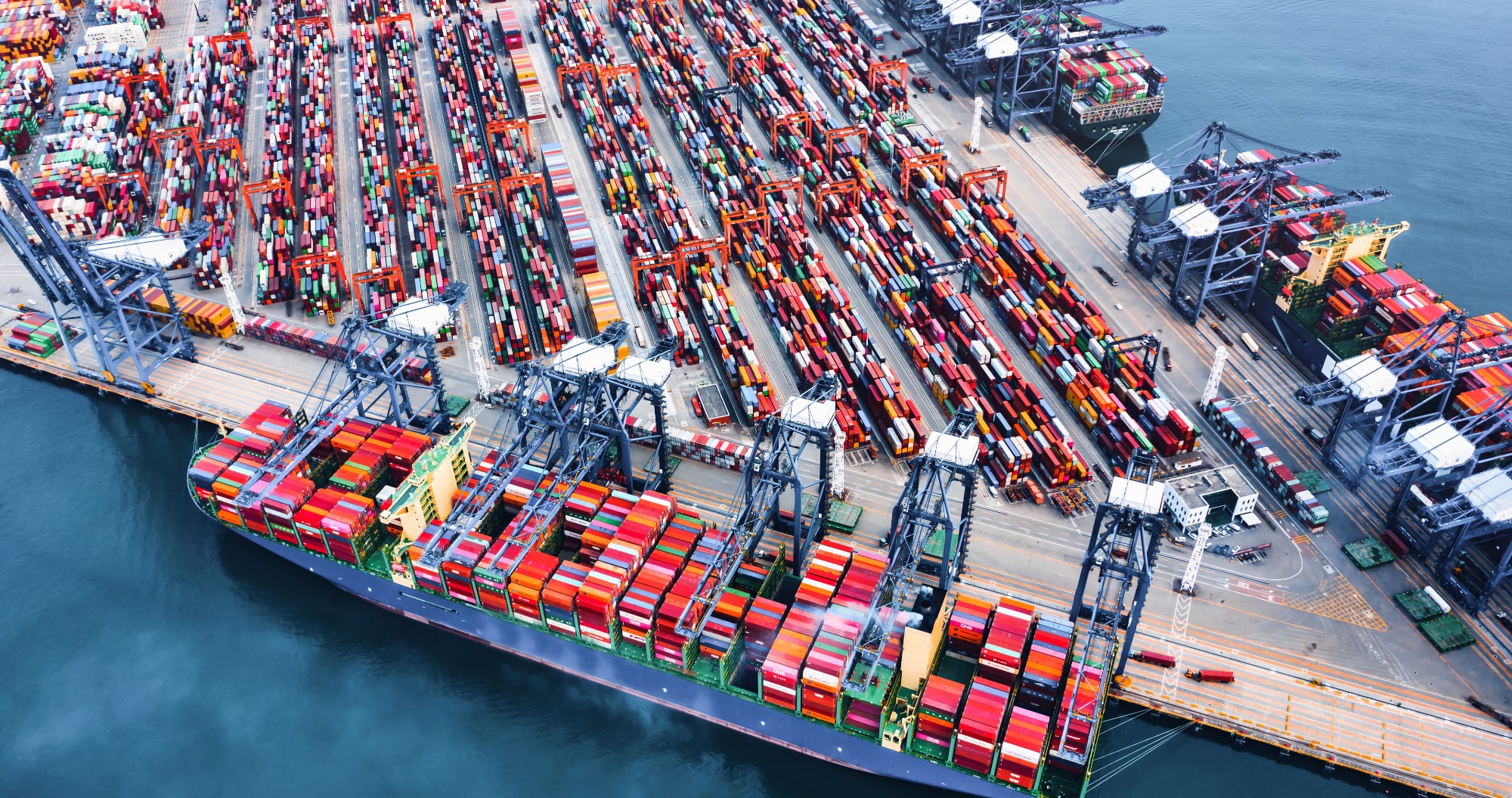
The completion of Reno ReTRAC is a critical component
to the Port of Oakland's $1.2-billion expansion and
upgrade. Although only 10% of Oakland's port cargo-or
98,900 containers-now travels by train, that's expected
to grow to 30%, or 574,590 more containers, by 2010.
Reno's train traffic is subsequently expected to more
than double as a result in upcoming years.
Without the project, idling vehicle delays would increase
from 188 hours to 473 hours a day, resulting in an additional
68 tons worth of carbon monoxide emissions. The project
will also eliminate noisy train warning whistles, much
to the relief of the 118 homes, 185 apartment units
and 1,136 hotel rooms located near the tracks. ReTRAC
is expected to inject $350 million into the local economy
from direct and indirect construction jobs as well as
related business activities, according to city figures.
|
Meeting Goals
Granite faces stringent traffic restrictions that prevent
no two adjacent streets from being closed at the same time.
For main thoroughfares, one traffic lane must remain open
on Third Street, with two available travel lanes on Plaza
Street.
Granite must meet five major project milestones with liquidated
damages of up to $10,000 a day. The firm has met its first
two deadlines, and ReTRAC is now expected to be operational
by November, with final completion in early 2006.
The project is expected to increase property values because
of the enhancements around the depressed trench. City ordinances
mandate that 2% of the project's value, or $400,000, must
be applied toward public art. Other improvements include designer
benches, lighting elements and sandblasted artwork on bridge
walls and columns.
"Our design and construction people worked very hard
to meet the city's goals on this project," says Bill
Wimmer, Union Pacific's vice president of engineering. "I'm
very proud of the effort they put into this."
|